
- 18
- Feb
- 2026
Kent Wildlife Conference 2025
- Details
- Richard Moyse
- Kent Wildlife Conference
- Hits: 837

The 2025 Kent Wildlife Conference was held on Saturday 25th October in the Darwin Conference Suite at the University of Kent, with around a hundred people attending. The conference had the themes of Urban Biodiversity and Citizen Science, and the programme consisted of the following talks:
Wild bees and habitat conservation in urban Tunbridge Wells. Dr Ian Beavis, Kent Field Club.
Buzzing in the East End (B.E.E). Scarlett Weston, Bumblebee Conservation Trust.
Improving partnership working for the proactive monitoring of river health. Josh Hammond, Environment Agency.
Thanet Coastal Project: working with local people to safeguard an urban marine environment. Tony Child, Thanet Coast project. Abstract: The Thanet Coast Project works to safeguard the urban marine environment by engaging with local people. Key efforts include raising awareness, promoting responsible coastal use through codes of conduct, and encouraging volunteer participation. The project, established in 2001, focuses on protecting marine and bird life, running wildlife events, and serving as a focal point for environmental enquiries. Volunteers play a crucial role in monitoring activities, reporting incidents, and helping on different initiatives including recording local marine and bird life and the control of invasive non-native species. More information is shown online at: www.thanetcoast.org.uk/
Intertidal Allotment: a prototype for bringing together artists, communities and ecosystems. Emma Leach & Andrew Merrit. Abstract: Intertidal Allotment is long-term project by Andrew Merritt (one half of the artist duo Something & Son), commissioned by Cement Fields with support from The National Lottery Community Fund. The project aims to create a functional artwork and new community allotment on the north coast of Sheppey, taking inspiration from the traditional allotment form and expanding it into the intertidal zone. This spring we installed a variety of different prototypes on the coastline, enabling the impact on the local community and ecosystem to be closely monitored. Longer term, we aim to create a modular and sustainable system that responds to the needs of local people and which can be replicated in other coastal locations, reconnecting communities with the coastline and sustainable methods of food production. In this presentation you’ll hear about the practical and statutory challenges we faced, about building a community around the work and about the species already observed finding habitat on our prototypes.
Mote Park: the Challenges of Managing an Urban Parkland. Alan Frith & Karen Thorp, Maidstone Borough Council.
From Coast to City: The status of beavers in Kent. Ben Morris, Beaver Trust.
Urban Plants - untangling the concrete jungle. Dr Trevor Dines, freelance botanist and author of the recent Bloomsbury publication, ‘Urban Plants’.
Read more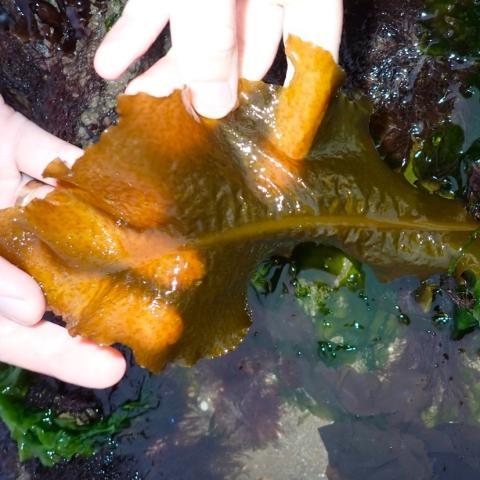 non-native kelp Undaria pinnatifida (wakame) was found growing attached for the first time in late August 2024 in Kent on low shore chalk rock at Dumpton Gap between Broadstairs and Ramsgate. The species long-known to occur on marinas in Ramsgate Harbour was first recorded in Britain in the Solent in 1994 and has since spread to harbours and marinas in the south and east of England to East Anglia. In the west country permanent populations have established on rocky shores. Several thalli and many drift specimens were recorded at Dumpton and since then Tony Child of the Thanet has observed it on low shore rocks at sites at Ramsgate. Its appearance on our coast is where the decline of native kelp species has been recorded. Further visits are needed to ascertain whether a permanent population will become established.